Data Engineering
Medallion Architecture in Fabric (Part 1): Setting Up the Environment
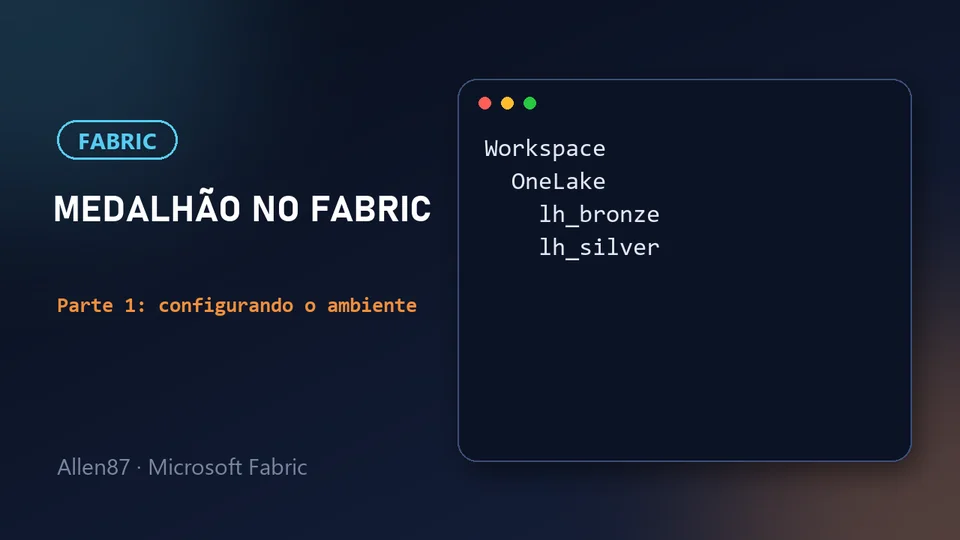
Part 1 of the series: capacity, workspace, OneLake and lakehouse, the starting point for building the medallion architecture in Fabric.
Articles on Power BI, DAX and data engineering, with practical code examples.
Part 1 of the series: capacity, workspace, OneLake and lakehouse, the starting point for building the medallion architecture in Fabric.
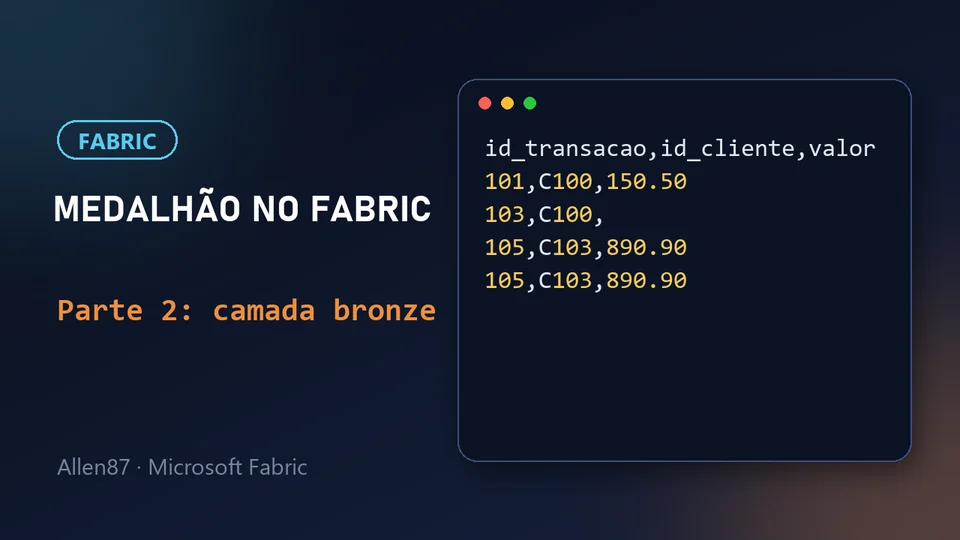
Part 2 of the series: the bronze layer keeps data exactly as it arrived. We create lh_bronze and load vendas_raw.csv.
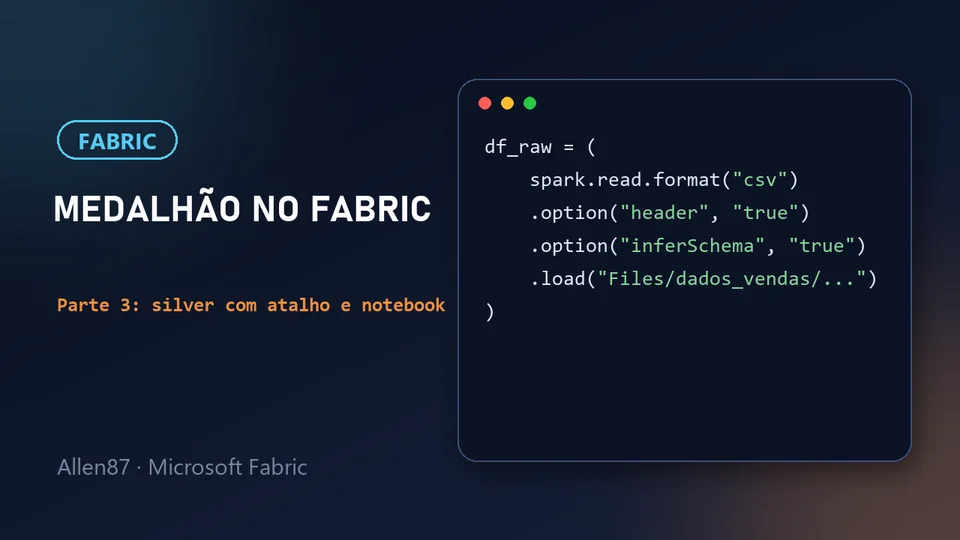
Part 3 of the series: a shortcut between lakehouses, a notebook attached to lh_silver and reading the CSV with PySpark, step by step with screenshots.
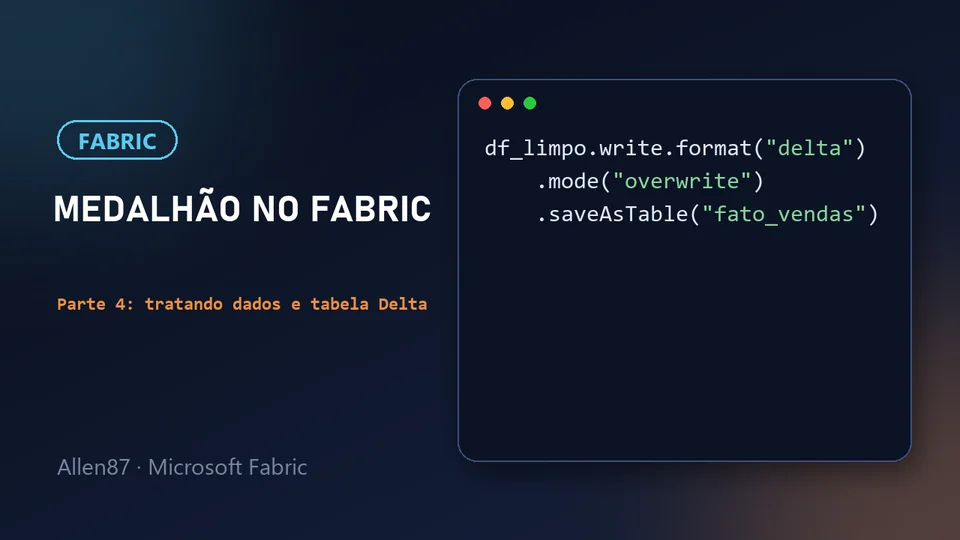
Part 4 of the series: PySpark cleanup, saveAsTable, the anatomy of a Delta table (Parquet and Delta log) and the ACID properties.
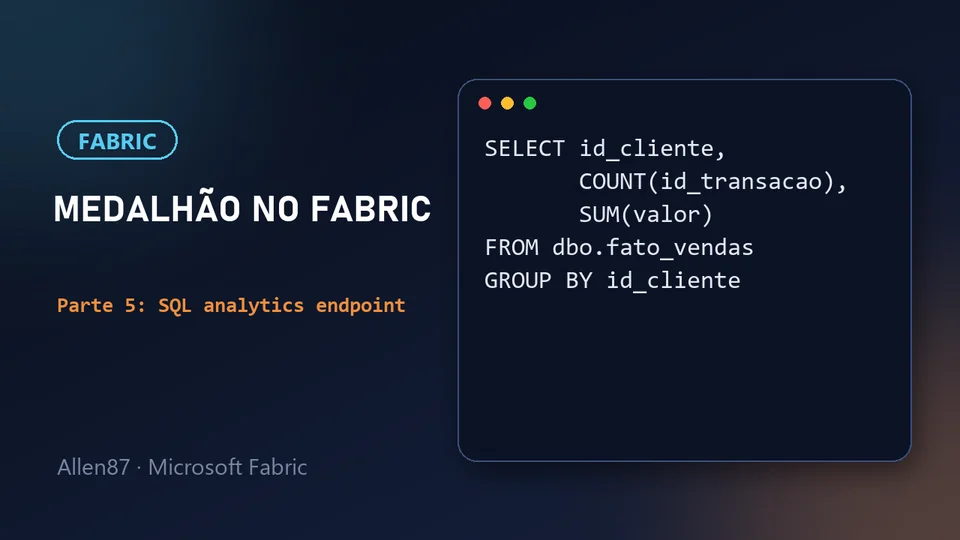
Part 5 of the series: the SQL analytics endpoint queries Delta tables with T-SQL but does not change data. See a first analysis on fato_vendas.
dTime is dCalendar's “rich cousin”: it shows at what hour of the day things happen. See how to build it with M and DAX.
A step-by-step to get keys out of your code: Secret Scopes via the Databricks CLI to mount Azure Data Lake, without the Premium plan.
How FILTER works in DAX, when to combine it with CALCULATE and how to keep it from slowing down your Power BI.
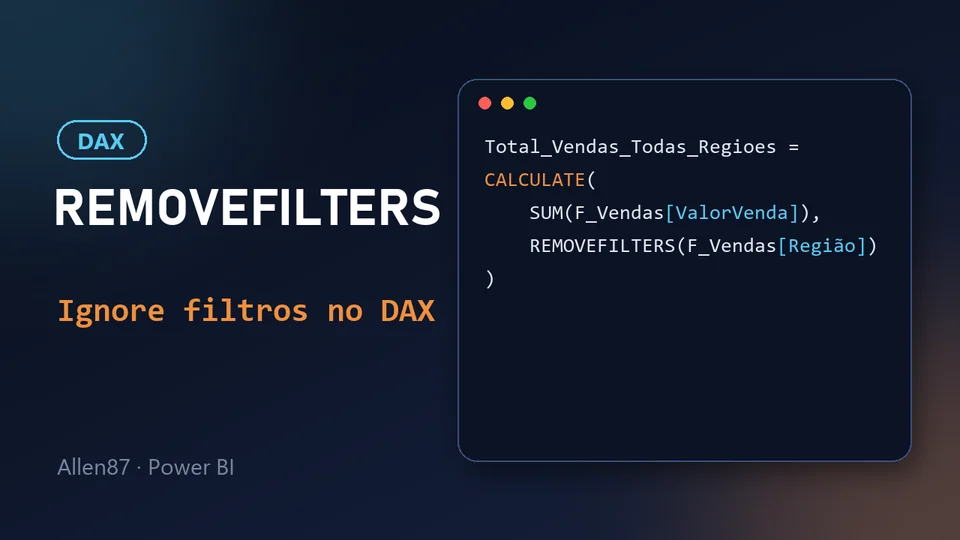
REMOVEFILTERS in practice: ignoring region, product and region, a whole table or every filter, and how to avoid confusing report users.
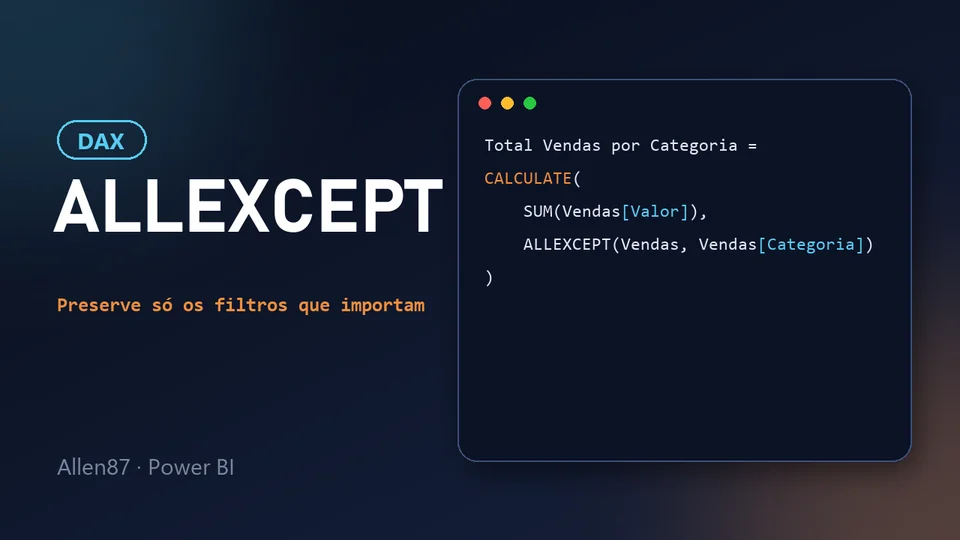
ALLEXCEPT in practice: total by category, average by department and total by category and region, preserving only the filters you need.
The DAX ALL function in practice: grand total, ignoring a single column and percent of total, with performance cautions.
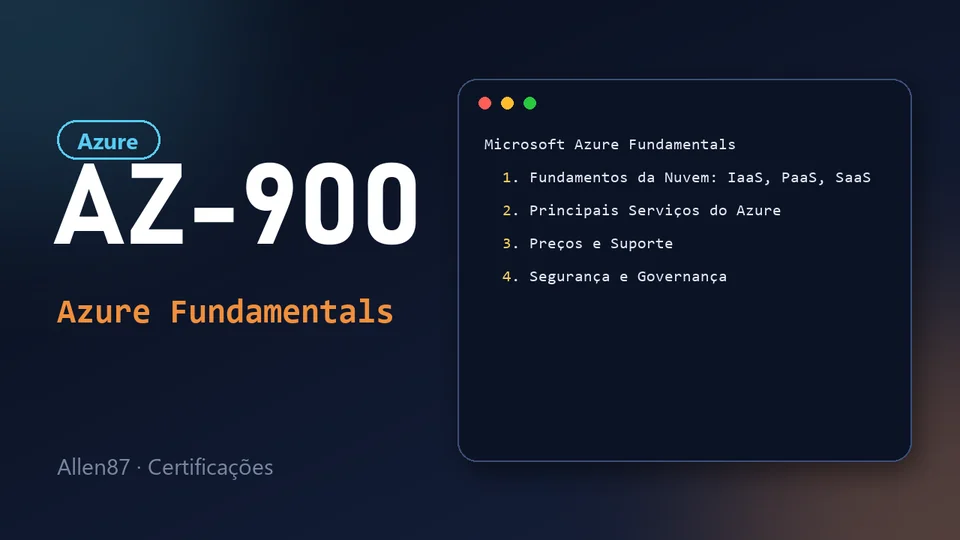
What AZ-900 covers (cloud concepts, Azure services, pricing and support, security and governance) and the material I used to prepare.
How CALCULATE modifies the filter context: category, previous year, grand total and cross filters, with DAX examples.
SUMX in practice: row-by-row calculations, specific conditions, RELATED and the difference from SUM.
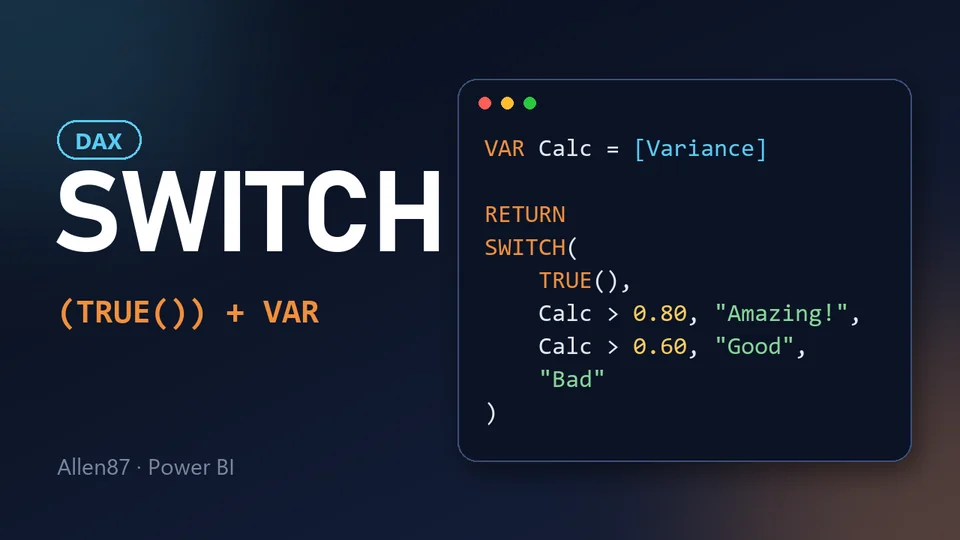
SWITCH(TRUE()) for readability and VAR for performance: two examples of nested IFs rewritten, with the same rule and clearer code.
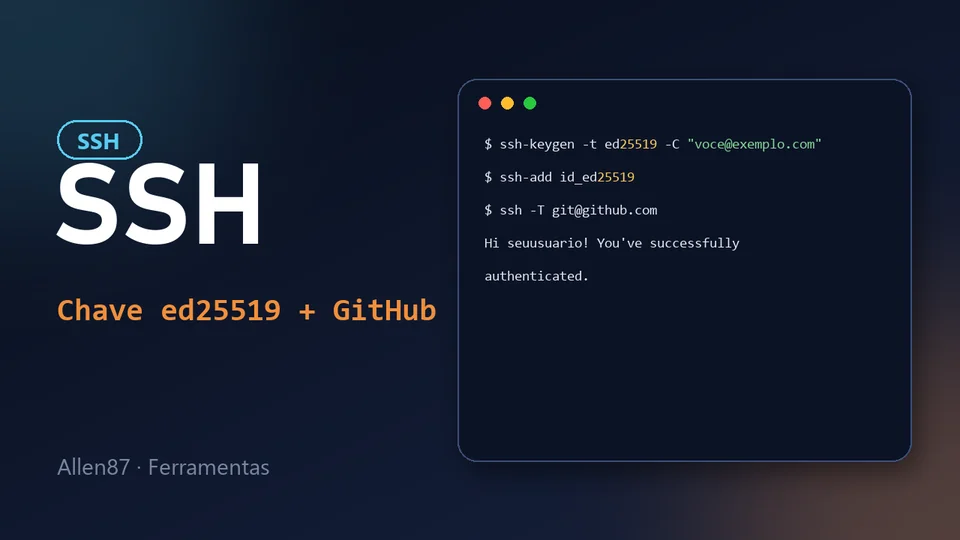
ed25519 key, passphrase, ssh-agent on Windows, adding it to GitHub, testing with ssh -T and git clone, plus what to do on Permission denied.
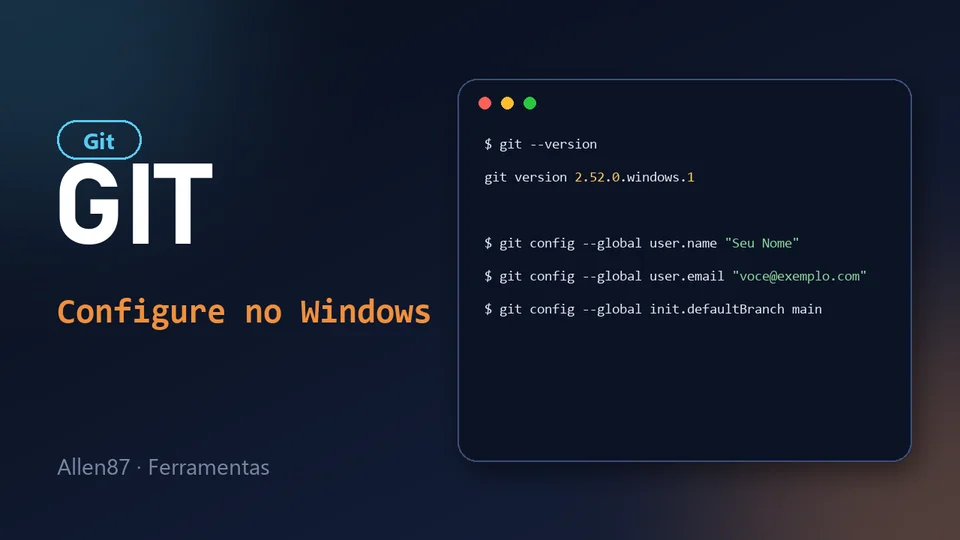
From installation to git config: name, email, main branch, line endings and editor, plus the difference between Git and GitHub.